How to integrate Open Science principles into the research cycle?
Open Science is about increasing the transparency, reproducibility, and reusability of research results. It touches upon data, software, infrastructure, Open Access to scientific papers and many other aspects relevant throughout the research process. However, for some reason (some people refer to the strong commercialization of scientific journals), Open Science used to be a niche topic and sharing research outputs was not the norm. Who hasn’t read about the infamous “We will share data upon request”? Fortunately, for more than a decade now, there has been a movement towards more openness; whether it’s the European Open Science Cloud, national initiatives like NFDI, or conferences pushing for more reproducibility like AGILE. UNESCO even released a whole Recommendation on Open Science a few years ago (see Fig. 1), which also considered societal aspects (e.g., Open engagement, Open dialogue) in addition to technical topics. Shortly afterwards, the Group on Earth Observation released the GEO Statement on Open Knowledge.
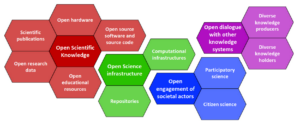
Figure 1: Overview of Open Science principles as defined by the UNESCO (2021).
Researchers, however, need to learn about all those open principles and how to apply them to their daily work. This brings me to this week’s challenge:
How to integrate Open Science principles into the research cycle?
Asking researchers to follow Open Science principles is one thing. Actually applying them is another and can raise many questions and doubts. It is what it is: a challenge! Open Science isn’t rocket science, but it’s also nothing that can be done within minutes. It’s not something that can be completed at the beginning of a project, but waiting until the very end will cost you time, quality, and nerves. Open Science is a cross-cutting way of working. That’s why people working in the context of Open Science often speak about the need for a so-called culture change. A big part of this cultural transition is the integration of Open Science across the complete research cycle.
Nevertheless, I don’t want to place the entire burden of responsibility on the researchers. Universities also play a crucial role by establishing policies and guidelines. For instance, they could aim to launch diamond open access publishing platforms, ensuring that neither authors nor readers face financial barriers for publishing or accessing research articles. While this idea sounds like a game changer, the true challenge lies in shifting the mind set away from journal impact factors towards other more quality-related metrics. Moreover, professors could include Open Science principles in their curricula and encourage their Ph.D. students to follow transparent research practices.
In any case, substantial progress can be made by focusing on the day-to-day workflows of individual researchers. So how about a thorough Open Science capacity building activity? 52°North can provide you with a tailored training strategy: whether you’re looking for a high-level presentation providing an overview of common Open Science principles or a full course composed of a lecture series and exercises. An online webinar is just as feasible as an on-site, hands-on workshop. We can discuss Open Science principles in general or focus on your specific discipline. Moreover, we can pay particular attention to the audience, such as students, early-career researchers, or senior researchers. Some of the following guiding questions might help you to better assess if Open Science capacity building is relevant for you:
- What does Open Science mean and what are the benefits/challenges?
- How can I publish research results in an open and reproducible way?
- What is FAIR data and how can I apply it to my work?
- How can I apply Open Science principles throughout the research cycle?
- How can I integrate Git into my work?
Of course we can address a wide variety of additional topics, and the training format remains entirely adaptable. To gather more insights, feel free to explore the links below, where you will discover ready-to-use slides, video presentations, and practical exercises. Don’t hesitate to reach out to us to discuss/design your customized Open Science capacity building strategy.
Possible formats: Lecture series | Workshop | Webinar | Hands-on | Short course
- Konkol, M. (2022). Open Science Training Materials. https://doi.org/10.17605/OSF.IO/MZ7K8
- Konkol, M. et al. (2023). Communicating data quality through open reproducible research. EGU Short course. https://meetingorganizer.copernicus.org/EGU23/session/46566
- Konkol et al. (2026). Supporting the understanding and reuse of reproducible analysis workflows. EGU Short course. https://www.egu26.eu/session/57881
- Summer School 2022 KISTE project workshop. Open Source solutions for Earth system data (R, OSGeo, Python): https://opengeohub.org/2022/04/29/siegburg-2022/
- UNESCO (2021). UNESCO Recommendation on Open Science. https://doi.org/10.54677/MNMH8546
Leave a Reply